Taxonomies and controlled vocabularies
I design, manage, and advise on the use and development of controlled vocabularies, taxonomies, ontologies, and thesauri.
A good controlled vocabulary, taxonomy, or classification system allows users to find what they’re looking for and discover important ideas, information, stories, and resources.
And it’s vital to use the right terminology. Language is political and particular to people, places, and communities. Many standardized controlled vocabularies and classification systems maintain and perpetuate the white, colonial, patriarchal, heteronormative, western-centric foundations on which they were designed.
Particularly if your content or collection is about marginalized or political topics, developing your own customized vocabulary or finding alternatives that better fit your content and the people it’s for and about can increase its discoverability and accessibility. Changing the words we use can even help to change they way we think.
What I offer
I work with organizations in any field, but I specialize in unique content, collections, and formats that require a thoughtful approach with the following:
Research, evaluate, and select a suitable controlled vocabulary or classification system
Design or advise on the design of a custom controlled vocabulary or classification system
Evaluate and make recommendations on a controlled vocabulary or classification system in use
Edit, update, or customize a controlled vocabulary or classification system
Assist with the implementation of a new controlled vocabulary or classification system
Policies, documentation, and training on controlled vocabularies or classification systems
Projects
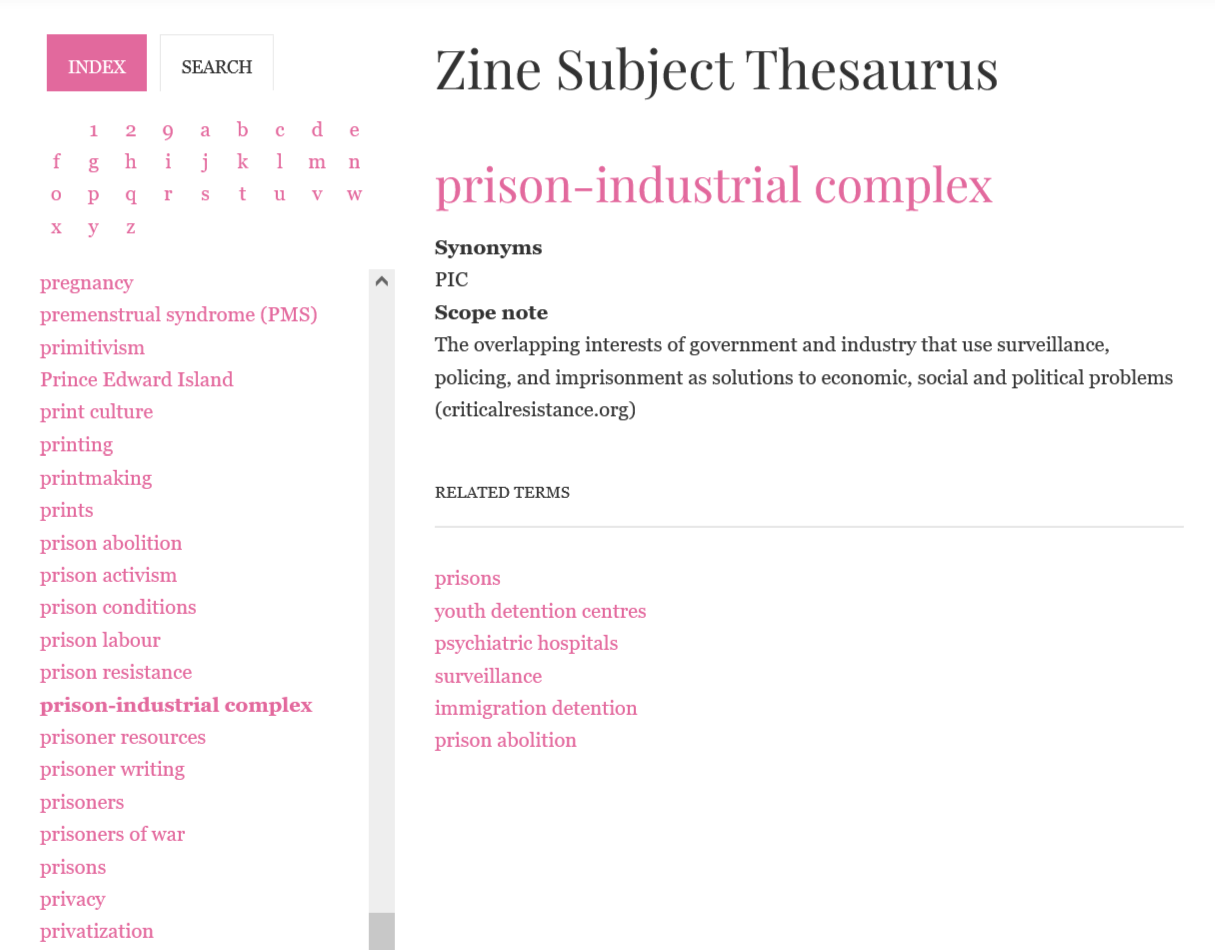
I developed the Zine Subject Thesaurus when I was cataloguing the zine collection at the Anchor Archive Zine Library in 2008. Finding standard subject thesauri to be outdated, overly complex, and not adequately representing the topics covered by zines (self-published underground publications), I decided to create a custom subject thesaurus for zines.
The Zine Thesaurus contains terms specific to the personal and political content in zines and used by zine readers. It is designed to be accessible, inclusive, and current and uses minimal hierarchy.
The Zine Thesaurus is used by zine collections around the world and since 2020 has been collaboratively developed and managed by a group of volunteer zine librarians and archivists. I lead the Zine Thesaurus Management Collective, which guides the development of the Thesaurus, and host monthly virtual editathons where we review and create new term records.
Subject taxonomy for the Directory of Open Access Journals
The Directory of Open Access Journals (DOAJ) is a global index of over 22,000 open access journals that increases the usage and impact of open access scholarly research. Journals in the DOAJ index are assigned a main subject, which helps researchers find journal content and is used in the distribution and analysis of DOAJ metadata.
The DOAJ was using the Library of Congress Classes (LCC) as its subject taxonomy, but had identified problems that echo broader criticisms of Library of Congress classification tools in the scholarly community as being Western-centric, outdated, and not accurately representative of the diversity of subjects in DOAJ’s global, multidisciplinary collection.
I worked with the DOAJ to review and select a new taxonomy, which included creating requirements based on use cases, surveying all known scholarly subject classification systems, evaluating taxonomies against the requirements, selecting the most suitable taxonomy, mapping the LCC terms to the new taxonomy terms for migration, and creating minor customizations.
Through this process, we selected the Canadian Research and Development Classification Fields of Research (CRDC-FOR), a current, comprehensive, openly licensed taxonomy of scholarly disciplines developed by the Canadian federal government to analyze research and development work undertaken in Canada. The CRDC-FOR will be implemented in the DOAJ index at the end of 2026.
Indigenous-centred vocabularies for the Mi’kmawey Debert Cultural Centre
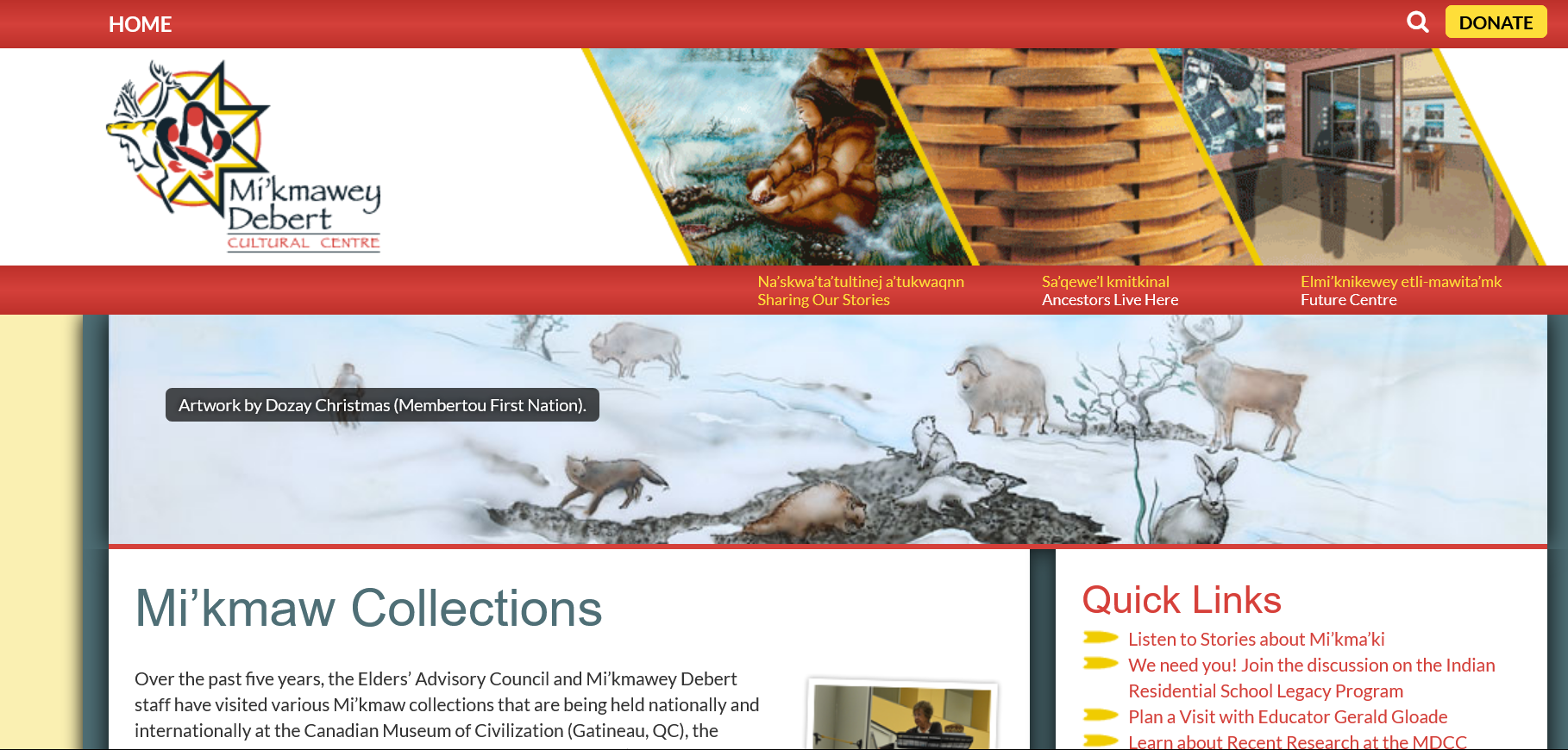
The Confederacy of Mainland Mi'kmaq is developing the Mi’kmawey Debert Cultural Centre (MDCC) dedicated to sharing, protecting, and exploring the stories and lives of the early Mi’kmaq (the Mi’kmaq are the people Indigenous to Mi’kma’ki, or what is colonially known as Nova Scotia, Canada). The MDCC will hold collections of artifacts, oral histories, and photographs that will be used for research, exhibitions, and community learning. These collections will be catalogued in a database and collections management system.
I worked with the MDCC staff to develop Mi’kmaq-centred localized vocabularies for fields in the collections management system, to accurately describe Mi'kmaq content, be accessible to Mi'kmaq users, and reflect a Mi'kmaq worldview. I advised on technical infrastructure and the selection, creation, and maintenance of terms for a Mi'kmaq Knowledge Thesaurus, People and Groups Vocabulary, and Mi'kma'ki Places Thesaurus.
The MDCC is still under development, but with renewed funding we hope the project will move forward in the near future.